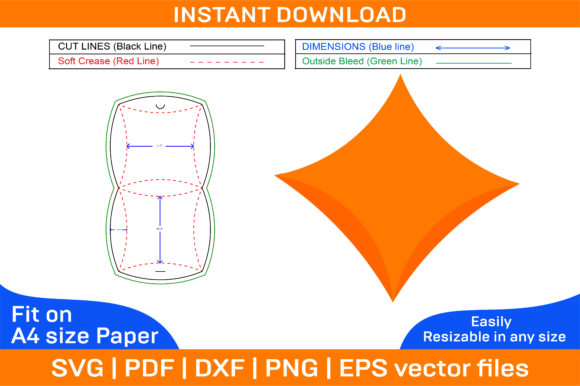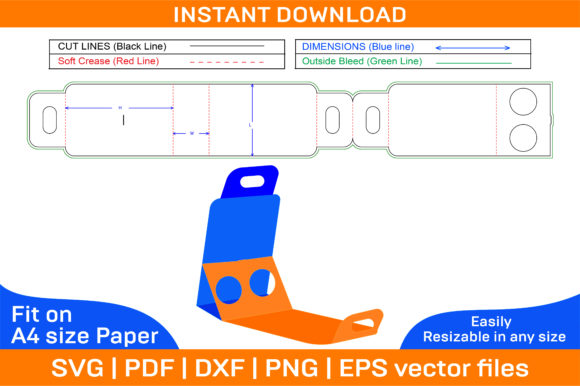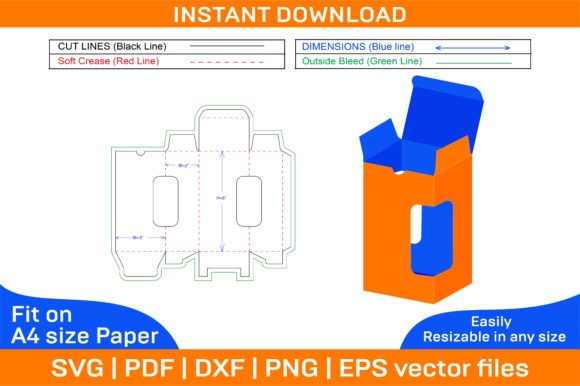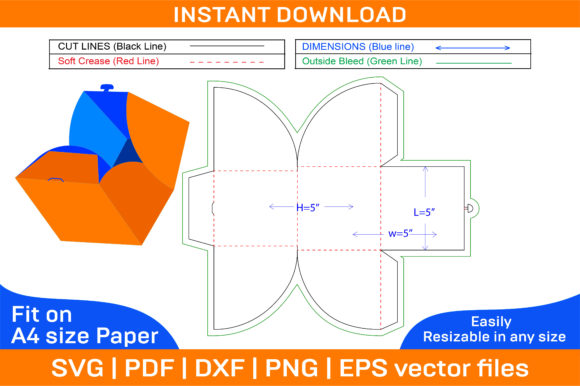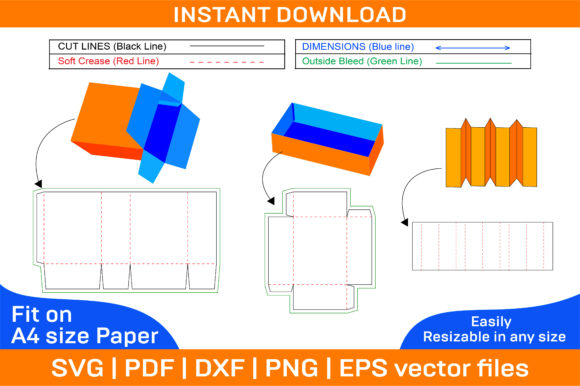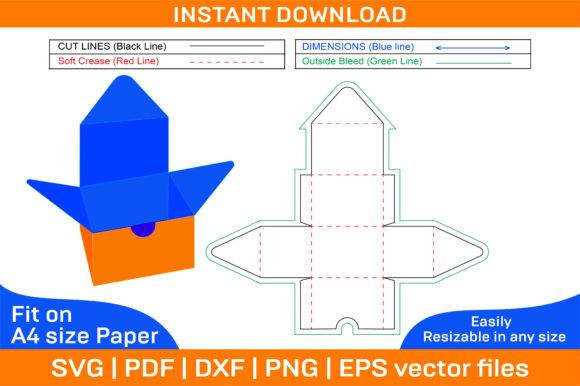
Cake Box or Gift Box Packaging Dieline Review
As a designer who spends hours tweaking stitch density and testing thread contrasts, I rarely get excited about packaging templates. Usually, these files are dry technical drawings meant for cutting machines, not the needle of an embroidery machine. However, when I first opened the Cake Box or Gift Box Packaging Dieline, my perspective shifted immediately. This isn't just a flat line drawing; it is a versatile design asset that bridges the gap between digital print templates and tangible, stitched art.
I approached this file with a specific goal in mind: could this geometric shape translate effectively into a commercial machine embroidery design for a boutique brand? The answer lies in how well the lines hold up under tension and how the visual personality of a box translates to fabric. The mood here is clean, modern, and surprisingly tactile. It feels like a high-end gift shop item waiting to be personalized.
From Digital File to Finished Product
The first thing I noticed about the Cake Box or Gift Box Packaging Dieline was its structural integrity. In embroidery, we often worry about distortion, especially on curved surfaces or stretchy fabrics. Because this design mimics the crisp edges of a folding box, it demands precision. When I imported the file, the SVG and DXF formats provided sharp vector paths that converted beautifully into satin stitches without losing definition.
Imagine a scenario where you are preparing custom merchandise for a local bakery. You want to offer a branded tote bag or a kitchen towel that says "Fresh from the Oven." Instead of using generic clipart, you use this dieline as the central motif. The result is a sophisticated look that elevates the perceived value of the product. The box shape acts as a frame, allowing you to add text inside or around it, creating a cohesive brand identity that customers trust instantly.
This approach works exceptionally well for embroidery project owners who sell on platforms like Etsy. A simple embroidered box on a baby onesie or a holiday ornament can become a signature item. The design suggests organization and celebration, which resonates deeply with buyers looking for personalized gifts. It transforms a standard piece of fabric into a statement of style.
Real-World Application Scenarios
I put the Cake Box or Gift Box Packaging Dieline through a rigorous test across several different mediums to see where it truly shines. Here is what I found regarding its performance in real-life situations:
- Tote Bags and Aprons: The clean lines of the box work perfectly on canvas or cotton duck. On a sturdy apron, the design adds a professional touch to a chef's uniform or a crafter's workspace. The contrast between the box outline and the fabric texture creates a subtle depth that looks expensive.
- Holiday Embroidery: For Christmas or birthday collections, this template is gold. You can embroider the box in metallic threads to mimic wrapping paper foil. It serves as a perfect placeholder for a child's name or a festive message, making it ideal for holiday embroidery projects.
- Apparel Decor: When applied to sweatshirts or caps, the geometry provides a structured anchor. Unlike organic floral patterns that might distort on the curve of a shoulder, the rigid lines of the box maintain their shape, offering a modern, graphic aesthetic.
- Digital Mockups: Since the package includes 3D render files and PNGs, you can create stunning printable mockup images before you even stitch a single thread. This allows you to showcase your craft business inventory to clients with realistic previews.
The versatility extends to commercial embroidery projects where consistency is key. If you are producing a run of twenty identical pillow covers, this design ensures every piece looks exactly the same. The stitch density appears balanced, avoiding the puckering that often plagues large fill areas on delicate materials.
Where to Exercise Caution
While the Cake Box or Gift Box Packaging Dieline is robust, it is not a one-size-fits-all solution. There are specific scenarios where this design requires careful handling. First, consider the hoop size. If you attempt to stitch this on a very small hoop, such as those used for tiny patches or children's socks, the corners of the box may lose their sharpness. The angles need enough room to execute properly without crowding.
Fabric choice is equally critical. Thin, stretchy knits like jersey t-shirts can warp under the tension of the box's straight lines. If you must use these fabrics, a heavy-duty stabilizer is non-negotiable. Similarly, textured fabrics like bouclé or thick fleece can obscure the fine details of the dieline. In these cases, the crisp edges might disappear into the pile of the material.
Another pitfall is dark fabric. While the design itself is neutral, the thread color selection becomes paramount. If you choose a low-contrast thread against a black shirt, the elegance of the box shape will be lost. Always test thread colors on scrap fabric first to ensure the design pops. Furthermore, if the design includes tiny lettering within the box, verify the legibility. Tiny text on a curved surface like a cap can become unreadable once stitched.
Finally, consider the washing instructions. Products that require frequent, harsh washing, like workwear or toddler clothes, need designs that are dense enough to withstand friction. Ensure the satin stitch coverage is sufficient to prevent the threads from snagging or fading quickly.
Professional Designer Notes
To get the most out of this graphics asset, I recommend a few practical steps before starting your production run. Start by checking the file formats included in the ZIP archive. With support for AI, EPS, PDF, and DXF, you have flexibility, but always open the file in your embroidery software to convert it to the correct format for your machine.
Review the stitch density settings. The original vector might suggest a density that is too light for the final fabric. Adjusting this manually can prevent the design from looking flimsy on the finished product. Also, inspect the small details closely. Sometimes, converting a complex vector to a stitch file can introduce unwanted artifacts at the intersections of lines.
If you plan to sell finished items, double-check the licensing terms. Many digital embroidery file products have restrictions on how many units you can produce commercially. Confirming this upfront saves you legal headaches later. Additionally, compare your design on both light and dark backgrounds in your mockup software. The visual appeal changes drastically depending on the background, and you want to ensure the brand image remains consistent.
Ultimately, the Cake Box or Gift Box Packaging Dieline is more than just a template; it is a tool for creativity. It offers a solid foundation for building a brand that values structure, quality, and attention to detail. Whether you are a hobbyist making a unique handmade product or a seasoned Etsy seller expanding your catalog, this design provides the clarity and professionalism needed to succeed. By treating it with the care of a true embroidery designer, you can turn a simple box shape into a memorable part of your customer's experience.